Training for your NPPL microlight licence
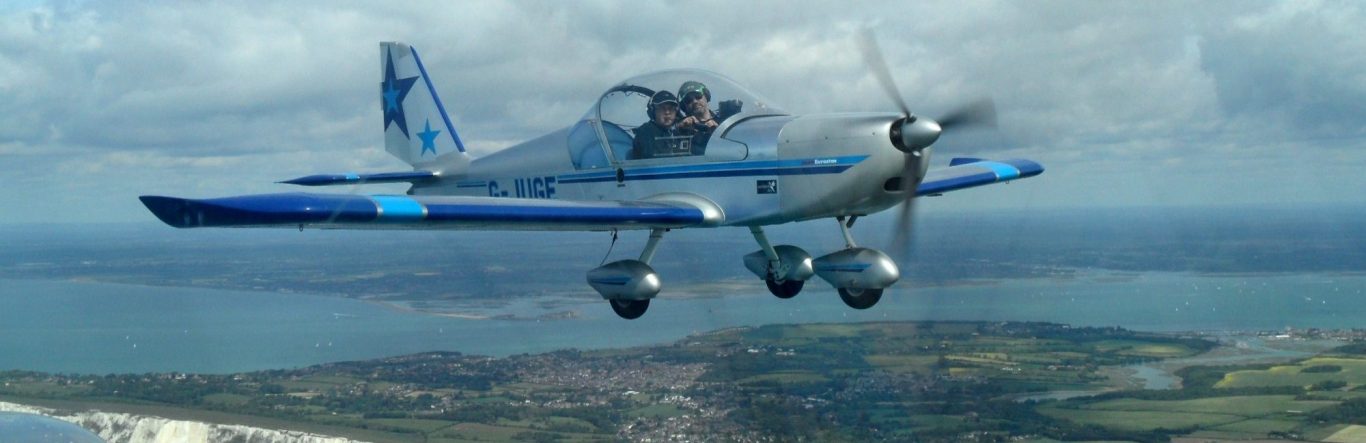
Thinking of learning to fly? Then there is no better choice than learning with us! Sywell is the home to a variety of many modern & historic aircraft. It is commonplace to find yourself flying alongside Spitfires, Mustangs & Tiger Moths to name but a few. We share the aerodrome with Helicopter & Light Aircraft schools too, which adds to the excitement of learning with us.
After your lesson you can relax in the Pilots Mess Cafe or the Aviator Hotel Bar & Restaurant, whilst enjoying watching life go by at Sywell!
What does it take to get a Licence
A National Private Pilot Licence (NPPL) with a Microlight Class Rating is required to fly a microlight aircraft, and can be gained by training with a UK Civil Aviation Authority (CAA) authorised flying instructor in accordance with a BMAA/CAA approved syllabus of training.
You must be at least 16 years old to fly solo, and you must be at least 17 years old to hold a UK NPPL.
The minimum requirements are:
- 25 hours total flight time under instruction
- 10 hours flight time solo
- 5 hours total navigation flight time
- 3 hours solo navigation flight time
- The navigation flight time is to include either:
- two separate qualifying cross country flights of 40 nautical miles each with an away landing, or...
- one qualifying cross country flight of 100 nautical miles with two away landings.
You will also need to pass a General Skills Test (GST) & an oral exam with an authorised flight examiner. In addition to this you will need to pass 5 written exams in the following subjects:
- Meteorology
- Navigation
- Aviation Law
- Human Factors
- Aircraft Technical
There is also the option to complete a NPPL with Operational Limitations, which has reduced requirements of 15 hours total flight time under instruction & 7 hours flight time solo.
The Operational Limitations at initial issue are:
- The pilot may not carry any passenger
- The pilot may not fly with a cloud base less than 1000 feet above ground level or with less than 10 kilometres visibility
- The pilot may not fly further than 8 nautical miles from take-off
To ensure that your skill level & knowledge is current you must have completed the minimum solo flight time, all the navigation flight training & the written exams within 24 months of your licence application. The GST & oral exam must be completed within 9 months of applying for your licence.
This may sound a little like hard work, however in practice it is fascinating and good fun. A microlight licence is simpler than a conventional aircraft licence and can be gained in approximately 2/3 the flying time and at half the cost.
*The above licence requirements are minimum’s & do not guarantee a pass, everyone learns at different rates & times may vary. Safety is of course the primary requirement, however anyone with determination and a little enthusiastic application should be able to gain their licence.
Training Syllabus Summary
PHASE 1: FAMILIARISATION EXERCISES AND FOUNDATION
1 - Air experience: the first lesson
2 - Component parts, controls and systems of the aircraft
3 - Preparation for flight and actions after flight
4 - Effects of controls
5 - Taxiing
PHASE 2: THE BASIC FLIGHT MANOEUVRES
6 - Straight and level flight
7 - Basic climbing and descending
8 - Performance climbing and descending
9a - Turning flight
9b - Climbing and descending turns
PHASE 3: SLOW SPEED HANDLING
10a - Critically slow airspeed
10b - Stalling, and spin avoidance
PHASE 4: TAKE-OFF, LANDING AND CIRCUIT FLYING
12 - Circuit training
13 - Advanced take-off and landing techniques
PHASE 5: ADVANCED HANDLING
14 - Advanced turning
15 - Unusual attitudes
PHASE 6: OPERATIONAL HAZARDS, EMERGENCY PROCEDURES AND UNEXPECTED/UNPLANNED OCCURRENCES
16a - Forced landings
16b - Precautionary landings
16c - Operation at minimum level
16d - Action in the event of an engine/cockpit fire
16e - Systems failures
PHASE 7: SOLO FLIGHT TRAINING
17a - First Solo
17b - Solo circuit, local area orientation and general handling consolidation
PHASE 8: VFR NAVIGATION
18a - Pre-flight planning
18b - En-route navigation, departure and arrival procedures
18c - Navigation at minimum level and/or in deteriorating conditions
18d - Unsure of position and lost procedures
PHASE 9: PREPARATION FOR THE GENERAL SKILLS TEST AND GROUND ORAL EXAM
19a - Dual revision for GST
19b - Revision for the ground oral exam
19c - Documentation review
HOW YOUR COURSE WILL BE STRUCTURED
Dual Flying Lessons
These lessons will be structured in a way that consists of a pre-flight briefing, followed by practical flight tuition in the air & a debriefing once landed. These lessons will cover general handling, advanced manoeuvres, circuits & navigation training. Most local area & circuit training lessons will last for about two hours, with one hour flying time.
The time will come when your instructor feels that you are completely safe to go solo - this will be a very rewarding milestone in your journey to achieve you licence!
Ground School
The syllabus lists the subject matter that you must understand. There is no minimum requirement for training by an instructor, but you must demonstrate you have gained this knowledge by passing the exams. Ground school can be a great way of ensuring your depth of knowledge is satisfactory enough to pass the exams.
GST & Oral Exam
These exams are usually completed towards the end of your course.
Tuition Costs
After an initial trial lesson/air experience or two, when you decide to begin a course of training, you will need to become a club member to benefit from reduced rates. There are two general routes to follow for training:-
- Using the school aircraft
- Using your own aircraft
Using a school aircraft is the most convenient method, there is of course no need to outlay the cost of an aircraft to learn to fly, and during the initial lessons you may decide that the sport is not for you. However if you are hooked, having your own aircraft to train on will save some money and your aircraft is always available – at times a school aircraft may not be. This is most useful during the solo stage of your flying training.
Booking Lessons
Each flying lesson is booked as a two hour time slot. This allows for one hour flying & time for briefing, aircraft preparation & de-briefing etc. In order for you to book the day & time of your choice it is advisable to book as far ahead as possible. Weekends are naturally the most popular times & tend to get booked up further ahead than week days. Some times there are cancellations, so it is often worth a phone call if you find yourself available at short notice. Please view our Terms & Conditions for our cancellation policy.